CHI Conference on Human Factors in Computing Systems (CHI ’26)
Oops, I Did It Again (But I Know It): Robot Failure Consistency and Awareness in Human-Robot Collaboration
Exploring the Impact of Robot Failure Sequences and Awareness on Human Trust
Abstract
In human–robot collaboration, repeated failures are inevitable and can critically impact user trust and perceptions of robot intelligence. This study investigates how different failure types — Freezing, Planning, and Grasping — and the robot’s awareness of these failures influence users across repeated interactions. Using a collaborative Tangram puzzle task, we conducted a mixed-design experiment with 54 participants, manipulating both the failure sequence type (homogeneous vs. heterogeneous) and the robot’s level of failure awareness (none, partial, full). The results reveal that user trust and perceived intelligence are affected by both the current and previous failure, with homogeneous sequences generally causing less trust decline than heterogeneous ones. Robots that demonstrated awareness — either full or partial — were rated significantly higher in trust and perceived intelligence than those showing no awareness, particularly for grasping and planning failures. Qualitative findings further underscore the importance of failure severity and the robot’s recovery behaviour in shaping user perceptions. These insights offer design implications for creating more resilient and trustworthy human–robot interactions amid inevitable errors.
Project Demo
Overview
This study explores the dynamics of trust in human-robot collaboration in the context of repeated robot failures. It focuses on how failure type consistency and robot awareness affect user perceptions of trust and intelligence.
Key Contributions
- Demonstrates the impact of failure sequence patterns on user trust in human-robot collaboration.
- Highlights the role of robot awareness in mitigating trust decline, particularly in planning and grasping errors.
- Provides insights for designing adaptive trust repair strategies in robotic systems.
- Establishes the importance of consistent failure sequences for perceived robot reliability.
Method and System
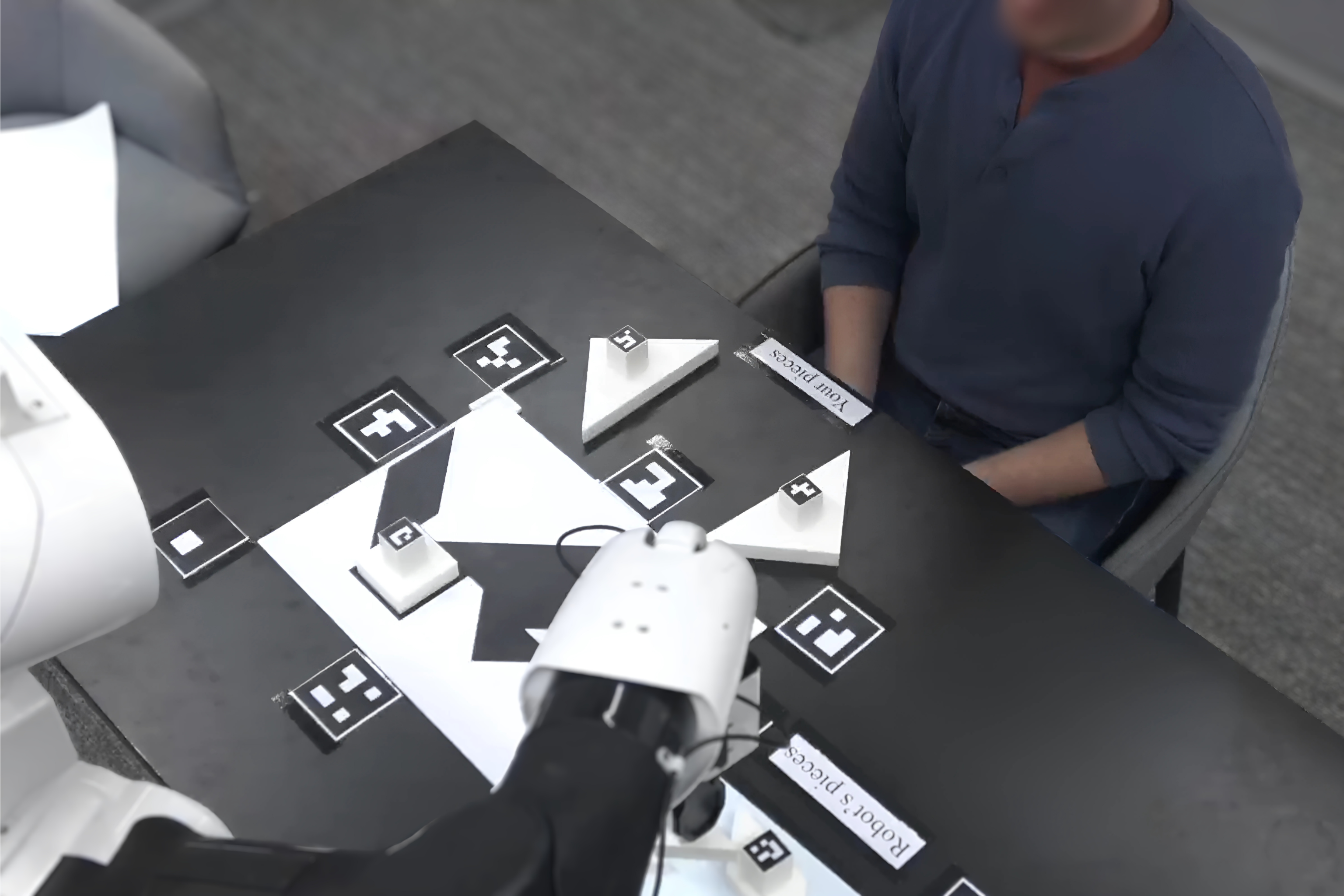
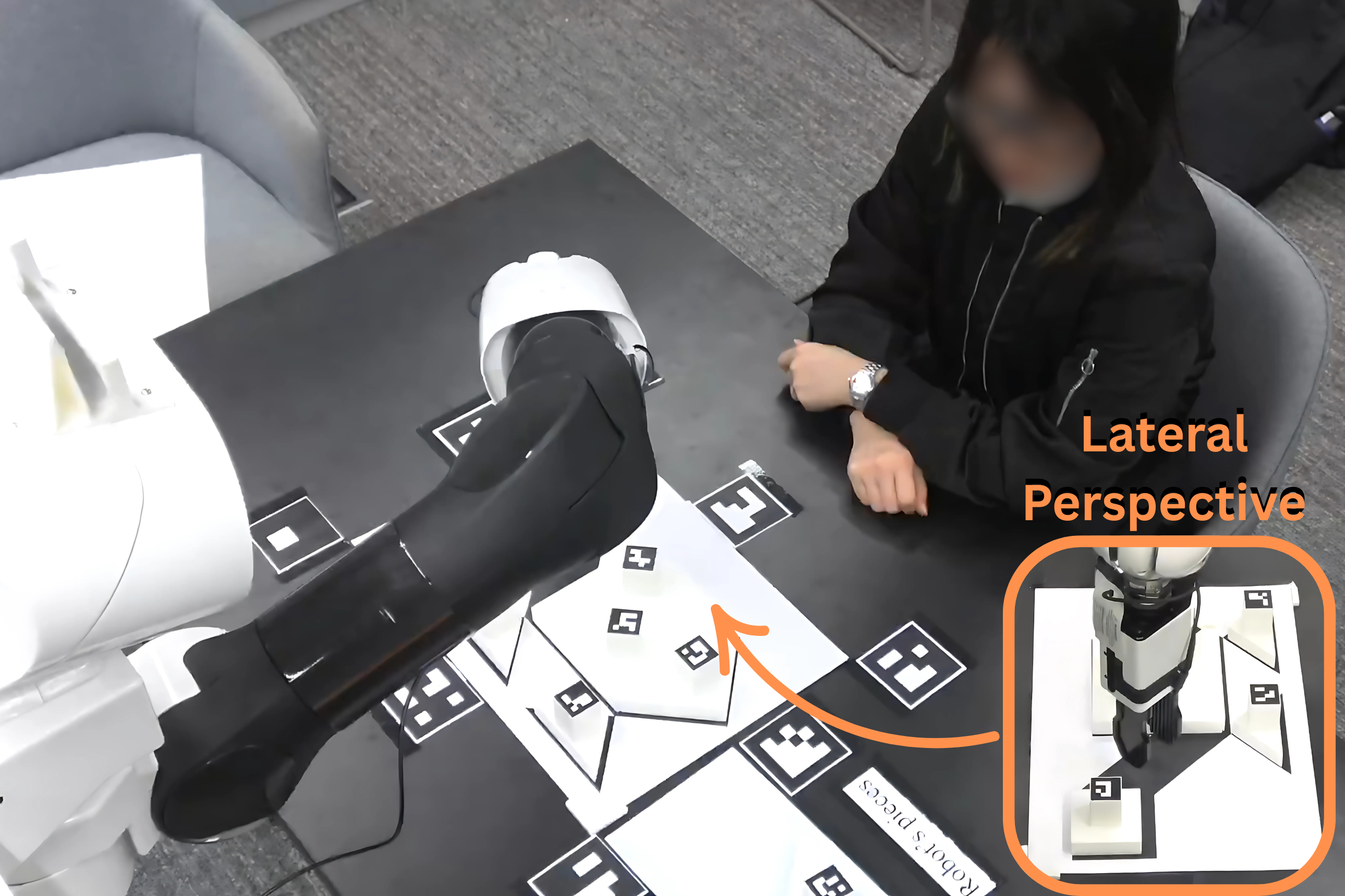
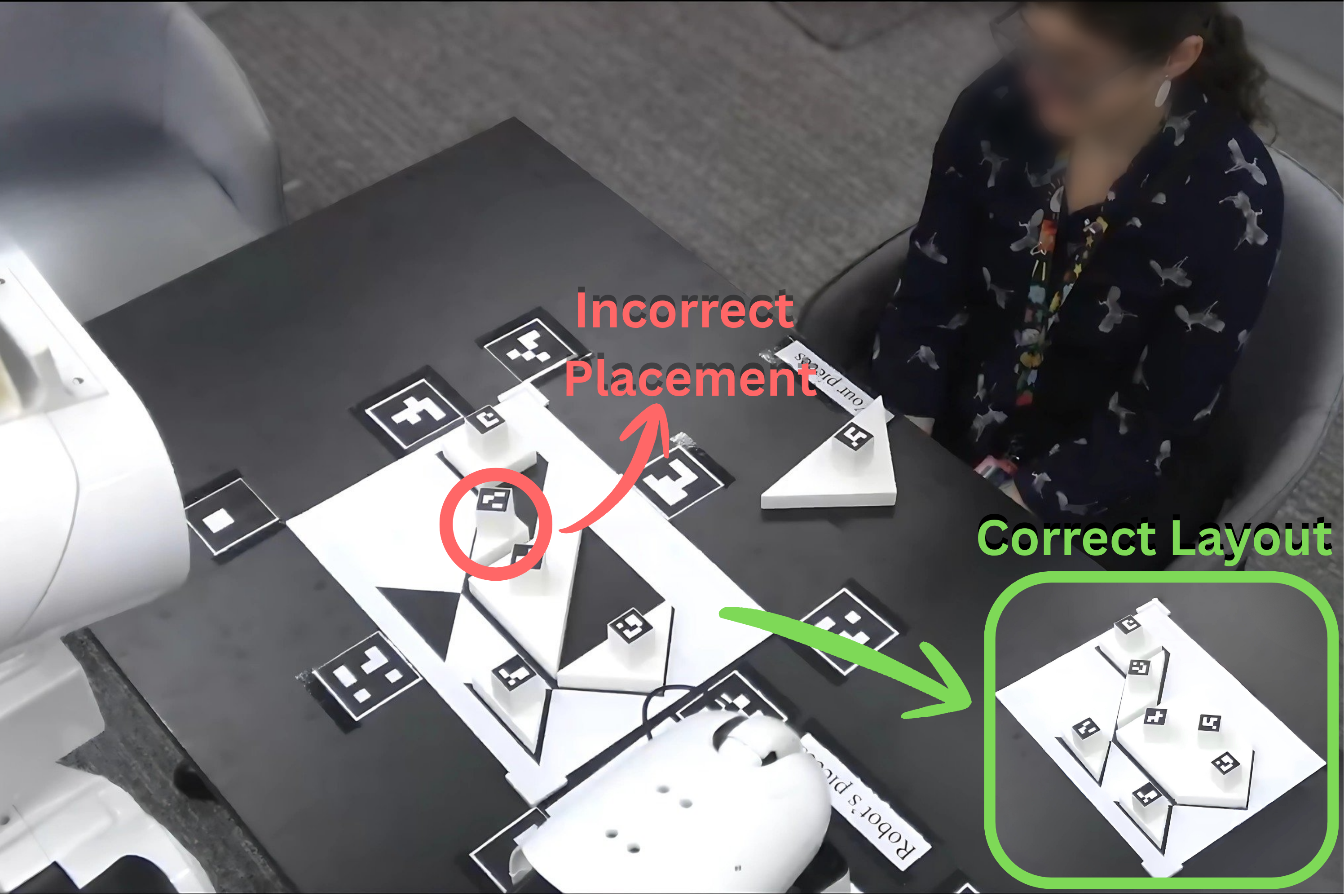
The experiment utilized a collaborative Tangram puzzle task. Participants worked with a robot that intentionally failed under differing conditions: homogeneous vs. heterogeneous failure sequences and varying levels of failure awareness (none, partial, full).
Results Overview
The level of failure awareness significantly influences user trust and perceived intelligence. Homogeneous failure sequences result in smaller trust declines than heterogeneous sequences. Robot awareness, especially for grasping and planning failures, positively affects user ratings.
Discussion
Limitations
Experiment was conducted in a controlled laboratory setting with a limited sample size, which may affect the generalizability to real-world applications.
Future Work
Future research should explore adaptive trust repair strategies in varied and real-world contexts, focusing on long-term interaction dynamics.
Figure Highlights
Citation
@inproceedings{chi2026-robotfailure,
  title={Oops, I Did It Again (But I Know It): Robot Failure Consistency and Awareness in Human-Robot Collaboration},
  author={Ramtin Tabatabaei and Vassilis Kostakos and Wafa Johal},
  booktitle={CHI Conference on Human Factors in Computing Systems (CHI ’26)},
  pages={},
  year={2026},
  organization={}
}