Gaze-Based Robot Failure Detection
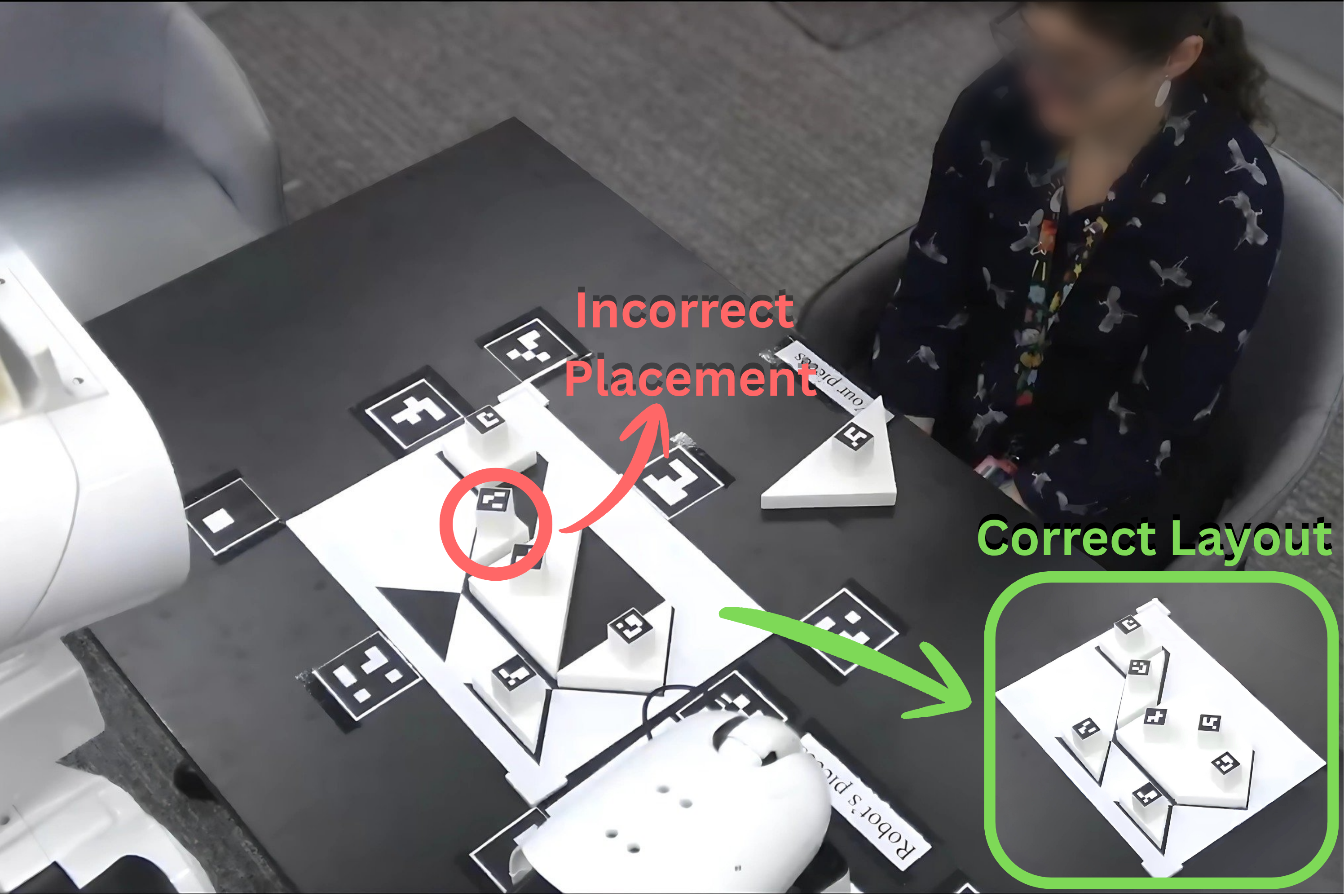
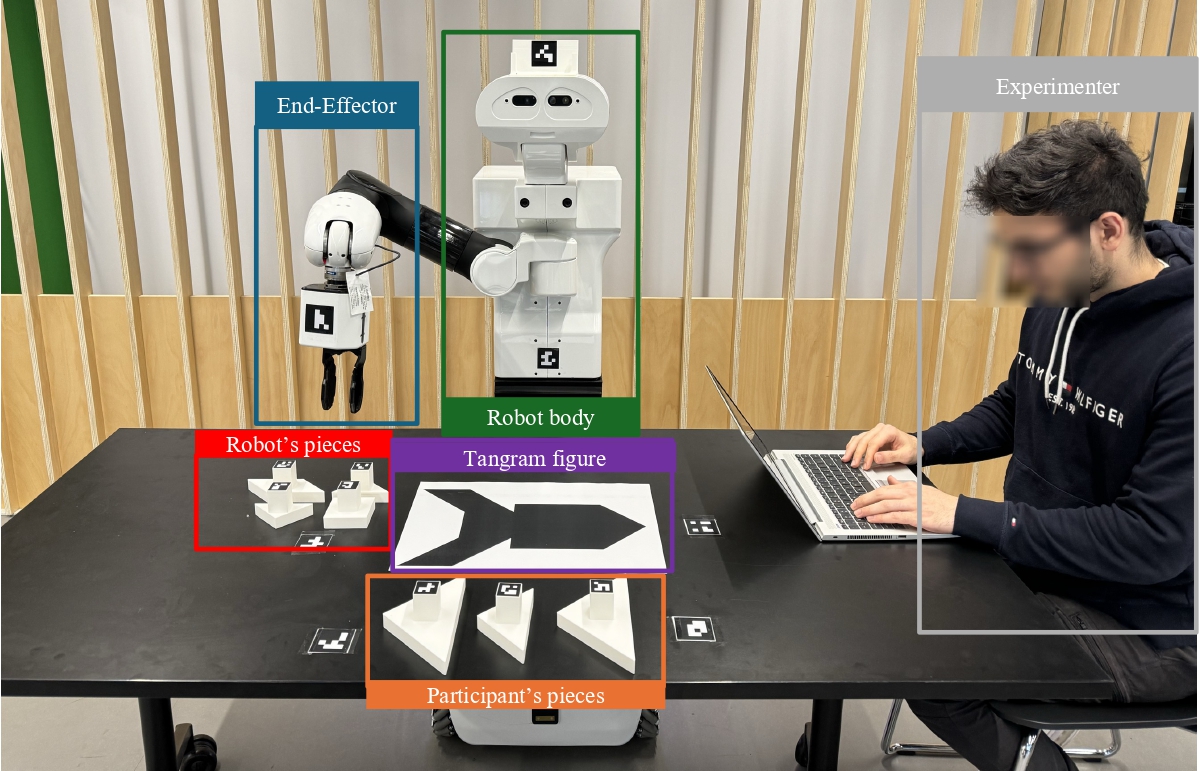
Investigating how gaze changes when a robot makes a mistake, and whether those changes can support early failure detection during collaborative tasks.
Research studies, software, and robotic systems for understanding and responding to robot failures.
Investigating how gaze changes when a robot makes a mistake, and whether those changes can support early failure detection during collaborative tasks.
Examining how repeated robot failures affect trust, and when a robot's awareness of its mistakes helps people continue working with it.
Developing a simulation-based framework that combines behaviour trees with vision–language model reasoning to detect robot failures and select recovery strategies.
A web application for annotating and analysing ROSBag data in human–robot interaction. I supervised the master's project behind its development.
A social office assistant combining conversation, person-following, autonomous navigation, and activities such as snack handovers and breathing exercises. A seven-participant office pilot explored its potential to support well-being, alongside concerns about privacy, noise, communication, and interaction timing.